Saturday, July 28, 2012

Poetry


PARK  

Park we have two 
broad width is not small, it 
did not lose another one inside. 
For you and me enough 
 
not decades Garden blossoms color 
 
the grass is not proportional Padang tapestry 
 
dipijak soft smooth feet. 
 
For we are not an obstacle. 
 
Since 
 
the park has both of 
 
you flowers, I beetle 
 
beetle me, you grow. 
 
Small, full of our solar garden 
 
spot of the world and claimed the 'man


GIVING OUT 

I do not mean going to share the fate,  
the fate of each is the silence. 
 
I picked you from a lot, but 
 
while we are in a quiet again netted. 
 
I never wanted to correct you, 
 
In the evening feast, become a child again, 
 

we do not kiss hugs weary, 
 
feeling you could not let go. 
 
Do not be united with my life, 
 
I really can not stay together 
 
It is also written on the board, in the nameless ocean!

Basic technique sprint


Sprint technique 
technique is highly critical of the performance during a sprint race. Through the stages of the race demands sprint technique varied as muscle activity, their time pattern and metabolic activity of the athletes from the reaction phase to phase transition the ultimate goal is to develop the speed from a stationary position.
sprint main objective is to maximize the horizontal velocity , the resulting loss of thrust to the fore. Running speed is determined by the length and frequency-step-step. to be able to run fast an athlete must increase one or both. Goal-sprint technique during a race is to deploy the optimum amount of power to the ground in a short time. A good technique is characterized by a decrease in braking power, effective arm arm, leg and body movements and a high-level coordination of whole body movements (IAAF, 1993: 22).
run the 100m sprint technique can be broken down into stages as follows:
1. Reaction steps and the drive
2. Stage run akelerasi
3. Phase transition / change
4. Maximum speed stage
5. Maintenance phase speed of
6. Finish
a sprint race to follow the same basic pattern, but the length and the relative importance of various stages. In the aspect of biomechanics running speed is determined by the length of step and step frequency (number of steps in the per unit time). To be able to outrun an athlete must increase one or both. Optimal relationship between step length and step frequency of the stages varies for different races. In the sprint, there are several stages, namely:
1. Start
The IAAF (2001: 6) a good start is marked with the following properties:
a. Konentrasi full and remove all distractions from the outside when in the position of the cue "bersediaaaaa"
b. Adopt an appropriate stance on the current position of the cue "siaaap"
c. An explosive impulse by two feet to start-block, the start point of the maximum
technique used to start should ensure that the greatest possible power can be generated by the athletes as close to the optimum angle-start 450. after the fastest possible reaction should be followed by a move (run) a strong acceleration of gravity and the center-point of the first steps should lead to maximum likelihood.
There are three variations in the start-squatting is determined by the placement start-block relative to the starting line: a. Start-short (bunch-start), b. Start-medium (medium-start), c. Start-length (elongated-start). Start medium is generally recommended, ince it provides opportunities for athletes to apply power in a longer time than the start-length (producing higher speeds), but does not require much power as the start-short (bunch-start). An assessment of the start-squat technique can therefore begin with the start of the medium. There are three parts to start the movement, namely:
a. Position "bersediaaa"
In this position sprinter taking early stance or position "bersediaaa", the foot of the fastest / agile placed on the surface of the sloping side of the front block. The hand is placed behind the starting line and support the body (see picture). The hind legs are placed
on the rear surface of the block, the eye could see the ground ahead, neck relaxed, head in line with the body (see figure). According to the IAAF (2001: 8) position of "siaaap" This is of basic importance that the athlete receives a posstur in a position to start " siaaap "which ensures an optimum angle of each leg to push it, a corresponding position of the center of gravity when the leg is straightened and the initial grip the muscles needed for an explosive contraction of the muscles of the leg. major signs of a position "siaaap" which The optimum power is: 1.Balanced weight distribution 2. Higher than the hip pivot axis of the shoulder 3. The center of gravity forward 4. Knee angle at foot of 900 fathoms, 5. 1200 knee angle on the hind legs 6. straightened leg press start block c. Position (on cue) "yes"thrust leg and foot in a start can be analyzed using on-board power pengalas dibangu the start block. When the feet hit the board on at the start, the impulse can be transmitted to and displayed on a dynamo-meter. Direction and duration of the impulse force, also timing of the impulse of each leg can be recorded. a key feature to note is: 1. rear legs moving first. Pattern indicates that the power of the very high peak power imposed starting-point of motion acceleration of the athlete's center of gravity rapidly decreased. 2. The application of the force of the front leg starts a little slow motion acceleration that allows point-center of gravity to the rear legs continue after the urge to disappear, and lasted longer. In fact, the strength of the force used by the fore-foot is approximately twice that of the rear legs. stage of recovery (recovery). Knee flexor muscles of the buttocks with a raised heel forward bending (flexio) forward in unison from the thigh muscles.Lower leg still bent tightly against the thigh moment of inertia parse. The knee is prepared to lead a relaxed swing forward of the lower leg in the next step scratch.Active knee push lever mennyangga short of leg swing. Optimal angular velocity of the thigh swings forward to help ensure a high frequency of running steps.

The purpose and function of this stage is to push the feet lost contact with the ground. Relax feet, swaying steps toward making active leg above the knee and as a stage prop up your knees and force preparation. The characteristics of the sign atu-tangda this stage are:
1. Relax swing that is not supported on the back foot to the heel close to panta.This short pendulum as a result of the high angular velocity allows to make quick steps.
2. Force the heel because the active encouragement knee, and must display the total relaxation of all muscles involved.
3. Horizontal traveling hip sustained as a result of the movement described
b. Front of the swing phase. Phase knees. This stage is a long step, and encouragement contributed waist. Effective preparation of the ground contact.Corner of the knee raised about 150 below the horizontal. Rearward movement of the lower leg

up to scratch sutau active movement of the foot above the base joints of the toes of the foot preformance supine position. Foot speed is achieved by moving downward / rearward as an indicator of active planting of the results in a rapid increase of the vertical component. 
purpose and function of this stage is that the knee is removed, is responsible for the effective length of step, in connection with the intensive arm swing . Forward and assure the horizontal route waist. Preparation for landing ith a scratch and a little movement possible obstacles in front of the stage antlers. This stage has the characteristics or signs, namely:
1. Force thigh / knee horizontally almost horizontal, set foot on the contrary as the most important prerequisite of a step-length and optimal fast.
2. Knee lift motion aided by the use of a diametrically opposite arm intenssif.
3. Elbow lifted upward and backward.
4. Dlam continued to swing forward to Relax from the lower limbs due to hip alignment is off, with the intention to start scratching motion of the active leg.

Ø  Phase Amortization
Recovery of the landing pressure is put on hold. There are tools the initial activation of the muscles that are initiated in the previous stage. The idea was to avoid the effect of braking / obstacles that are too large to make a long stage prop / prop short as possible. This phase has the purpose and function as the amortization phase of a major work phases. Controlling the landing foot pressure by the quadriceps muscles are activated earlier and leg muscles aim to make something explossif motion to extend the previous step.
This stage has the following characteristics or marks:
A. Active movement of the outer claw foot with your fingers upward.
2. Range of active forward must not add to the long-step unnaturally, but permitted the waist (center of gravity of the body) runs quickly retorted feet above the point.
3. Avoid a power inhibiting excessive.
4. The contact time in front tine must be as short as possible.
Ø  Support the Stage / Support your back
The magnitude of horizontal impulse and encouragement marked. It is a long buffering brief.Angle as close to the horizontal thrust. There is an elastic extension of the joints of the foot, knee and hip. Support the linear movement of the swing arm by a force efektif of the elbow in a swing back, swing legs and intensify the drive and determine how effective are the center of body mass by transverse movement of the expansion push. Togok body facing forward.
Criteria for the buffering stages are:
A. Short time of period prop / prop whole.
2. A significant acceleration impulses in the back of the stage prop.
3. An optimum time of the acceleration impulse at stage prop / prop back.
4. There is almost no braking power / resistance at the rebuttal stage.
The purpose and function of this stage is a re-acceleration phase, a buffer for a short time, and the preparation and development of a rapid horizontal thrust.
This stage has the characteristics or signs, namely:
A. Placing the foot with an active, followed by alignment of the joints: feet, knees, hips.
2. Using the muscles of the plantar-flexor muscles and straightening all the corsets feet.
3. Straight line and the body leaning forward about 85 0  with the track.
4. The use of the active arm bent about 90 0  in the opposite direction from the direction of the race.
5. Elbow leads the arm movement.
6. The muscles of the head, neck, shoulders and body are relaxed.
7. Early stages of the swing motion of the knee raised leg.
c. Movement finish
Finish the movement is a movement of followers or additional motions before stopping completely after running maximum. It is intended that the body can adapt back and prevent injuries

Various kinds of fitness equipment


Fitness Founded in April 1906, sporting goods manufacturers association began to meet the needs of a growing industry. Initially, SGMA was founded by six sporting goods manufacturers, but that number quickly expanded as the demand for the use of quality goods increases.

In 1941, SGMA to develop some special sports organizations to help meet the needs of workers in individual sports. These organizations include the National Golf Foundation, Athletic Institute, the industry association tennis and the World Federation of Sporting Goods. All these organizations have provided support for any sport or industrial workers they represent.

In 1957, the SGMA to develop and launch the sporting goods fair, which is a convention that is used to display a new use goods and merchandise. Then, in 1986, just named the Super Show. At its peak, The Super Show is a sports and fitness of the largest event marketing.
Fitness is a blend of sports and activities conducted in place exercising or at home. Physical fitness consists of two related concepts: general fitness (a state of health and well-being) and specific fitness (task-oriented definition based on the ability to perform specific aspects of sports or work ). Physical fitness is generally achieved through exercise, proper nutrition and enough rest. This is an important part of life. In previous years, general fitness is defined as the capacity to carry out day without undue fatigue. However, tourism increased automation, changes in lifestyles following the industrial revolution provided the definition is not enough .Today, physical fitness is considered the size of the body's ability to function efficiently and effectively in work and leisure activities, to be healthy, to resist hypokinetic diseases, and to meet emergency situations. (Order)

So therefore for human physical activity to help create a tool fitness in the sport. Fitness is a series of gestures humans do that is intended to provide gestures. Some tools that can be used dala fitness are:
 exercise bike
Their role is: indoor cycling as a tool that serves to exercise and keep esehatan as well as fitness and stamina to keep the body becomes more fit.
Fitness ball
Their role is sebagaialah orah sport for people who have low blood pressure and to prevent back pain, and He strengthens the body muscles are used to stabilize the spine.
Vibration Exercise Machine
The usefulness of this tool is a tool fitness exercise as well as therapy to reduce fat in the body, and reduce wrinkles on the muscle, reducing the risk of bone fractures due to the less powerful.
fitness Belt Pouch
The usefulness of this tool is as a conduit for the divers weight rapid release, and in case of emergency these tools can be a tool for instant floating back into the water.
Barbel
The usefulness of this tool is to develop strength and size of skeletal muscles, and make the muscles stronger and bigger.


Exercise Band
Their role is as a coach for the hands to strengthen and develop rangka.sehingga hand muscles become stronger and more muscular.

exercise mat
Their role as protective gear during sports because it is soft.
Hand Stretch
The usefulness of this tool is as peregang hands to prevent injury to the hand during exercise requires more strength in the hand, usually worn on the wrist.
Latex Abdominal Exercise Machine
The usefulness of this tool is as fasteners muscles in the legs, especially calves, this tool can also burn the fat on the calf, hip, thigh
Recumbent Bicycle
The usefulness of this tool is as a means of cycling in fitness that is done by warping lying on it. This bike can make the muscles stronger and burn fat at a particular body part.
Aeriobic step
The usefulness of this tool is a tool to move the aerobic exercisers to move up and down the legs.


Chest expender
The usefulness of this tool is sebgai coach for arms and chest muscles so that muscles become stronger, it can train the part of the chest in order to better shape
Zumba Toning Sticks
Adalh usefulness of this tool as a means for fitness dancers are useful as a reduction of fat in the hand while making the muscles stronger.
Pilates Reformer
The usefulness of this tool is a tool fitness fitness trainer on the specific muscles and makes the body fresh.
Pilates Reformer
The usefulness of this tool is a tool lying on fitness that are generally used to sit up exercise
Massager
The usefulness of this tool is as fat burners are generally used to shrink your thighs and calves by the weather as well as streamline and leg muscle memperkencang
Wristbands
The usefulness of this tool is as protective wrist at a certain fitness to prevent injury
Dumbbell
The usefulness of this tool is a fat remover that makes certain body parts more menecil, but their role is not much different from the barbell.
Ropes Jump Ropes
The usefulness of this tool is a tool to do the jump rope exercise.
Yoga Mats
The usefulness of this tool is not much different from the aerobic step difference is the size and how to wear it.
Golf balls
The usefulness of this tool is a tool to play the game of Golf.
Double Exercise Wheel
The usefulness of this tool is a developer of power in the muscles, especially the muscles of the hand and fasteners muscle, burning fat in certain parts

Football
The usefulness of this tool is a tool to play the game of football
Solar Charger
The usefulness of this tool is a measure of heart rate in some fitness equipment
Sauna Suits
The usefulness of this tool is as fat burners in almost all parts of the body with less use of heat from the engine


Badminton racket
Sebgai usefulness of this tool is a tool to do the game of badminton.
thumbnail
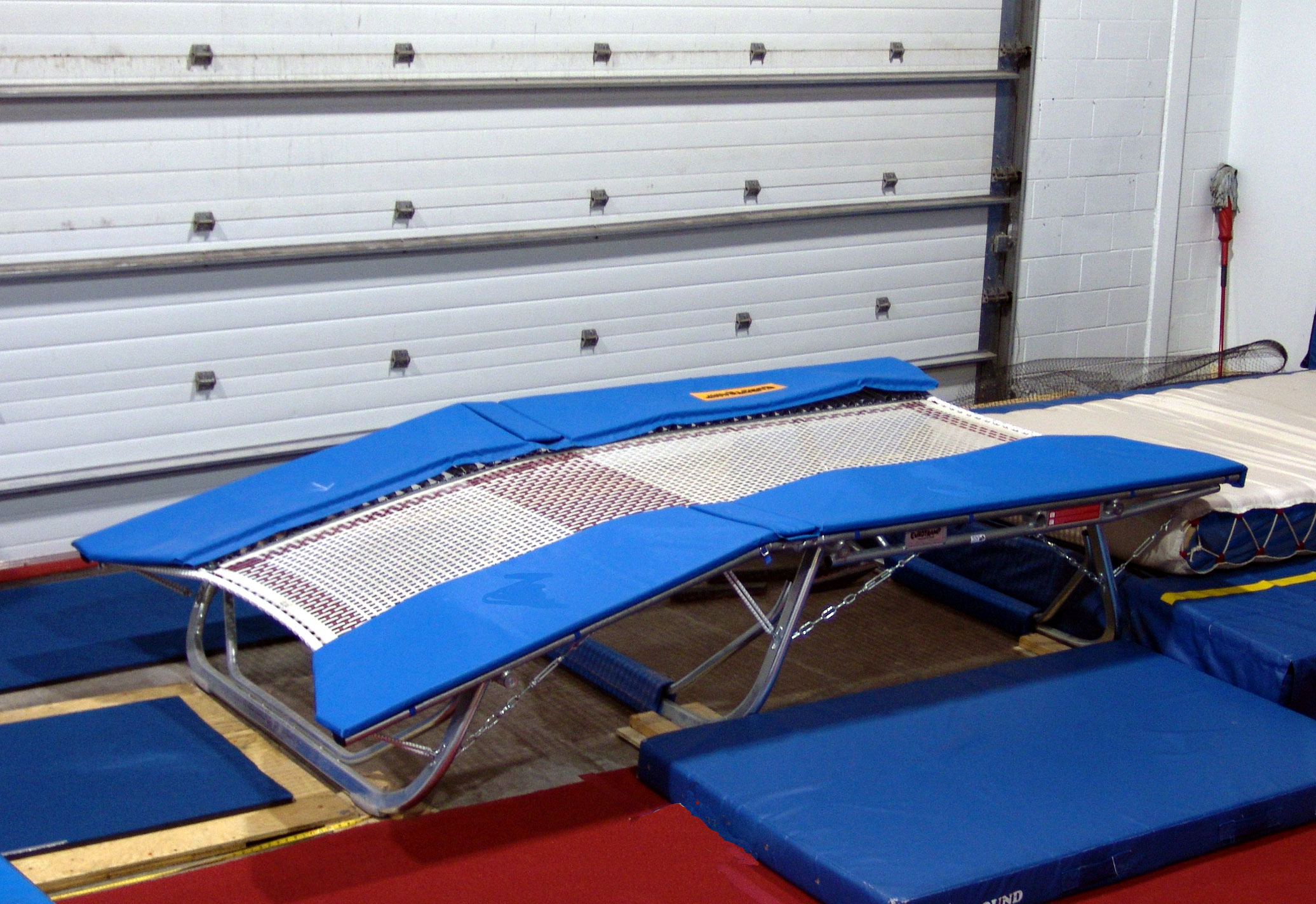
The usefulness of this tool as a trampoline, but the difference is the shape and extent of it.
yoga ball
The usefulness of this tool is to practice yoga exercises are the first to kayang on abdominal exercises.

T9500
The usefulness of this tool is to run in place and tighten and strengthen your leg muscles sertamembakar fat on a particular leg bagina

Pro Club Leverage leg
The usefulness of this tool is as a reinforcement for the leg muscles as well as pengmbang for leg muscles and burn fat in specific parts of the foot

workbench leverage gym
The usefulness of this tool is the weight training as a tool in the hands mainly my arm to tighten the hand muscles mengmbangkan hand muscles and burn fat at the hands of certain
Golf club
The usefulness of this tool is a tool to play Golf
Bicycle
The usefulness of this tool is a tool for physical exercise that is useful for mengancangkan danmembakar leg muscle fat in certain parts of the foot
baseball glove Hand
The usefulness of this tool is to play baseball as a tool used to catch the ball
Hockey Helmets
The usefulness of this tool is as protective headgear when playing on the ice Hocky
Punchig bag stress ball
The usefulness of this tool is a boxing workout on a particular sport to train hand muscles and burn fat at the hands of certain
Basketball
The usefulness of this tool is a tool to play basketball

Stopwatch
The usefulness of this tool is a measure of the speed of time in performing a particular activity

Whistle
The usefulness of this tool is sebgai grantor at the time of the start or finish

Volleyball Passing Up and Down


Pass on useful for passing and bait
        
       Basically pass the ball is caught on, touch kekening and catapult back up, but because the movements are done very quickly, the ball looks like a bounce.
1Pemain do attitude ready.
2Badan extended upward to straighten the leg, along with extended both hands up, the attitude of the fingers as if to summarize the ball.
3Tungkai bent back until your knees make a point of 135 º , the position of the arm bent in front of the face above the forehead and the ball is touched by the fingertips ² hand .
4Tungkai on tiptoe and stretched back to the ball bounced forward with the finger and arm-driven assistance to straight up.
5Kembali to ready stance


Lower Pass is useful for passing and bait
        
       Players do attitude ready.
Both hands stretched tight and straight forward, his arms making an angle of 45 º with the body.
more humble posture by lowering the knee angle of 135 º to 45 º.Limbs begin extended upward slightly forward, the ball on the outstretched forearm straight. Legs and hands shoot up should not be tiptoes past his shoulders.
Return to ready stance
       
² Types Lower PassPass two Hands Down
      Pass Under One Hand
Pass Down Scrolling horizontally
       Scrolling backward pass the Lower Half
       Pass Down Roll Forward

Hiatal hernia


Hiatus hernia or hiatal hernia is the protrusion (or herniated) from the top of the stomach into the thorax through a tear or weakness in the diaphragm.
There are two main types of hiatal hernia:
The most common (95%) is a sliding hiatus hernia, in which the gastroesophageal junction moves above the diaphragm together with some of the stomach.
The second kind is rolling (or paraesophageal) hiatus hernia, when part of the stomach herniates through the esophageal hiatus and is located next to the esophagus, gastroesophageal Junction without movement. Account for the remaining 5% of hiatus hernia.
The third type is also sometimes described, and the combination of first and second kind.
The signs and symptoms  hiatal hernia is often called the "mimic" because the symptoms can mimic many disorders. For example, a person with this problem  often  experienced chest pain, shortness of breath (due to the effect on diaphragmatic hernia), and heart palpitations (due to irritation of the vagus nerve).

In most cases, hiatal hernia causes no symptoms. Pain and lack of  comfort  the patient experiences  the pain and discomfort  is due to reflux of stomach acid, air, or bile. While some causes of acid reflux, it occurs more often in the presence of hiatal hernia


Schematic diagram of different types of hiatus hernia. Green is the esophagus, the stomach is red, purple is the diaphragm, blue is the HIS-angle. A is the normal anatomy, B is a pre-stage, C is a sliding hiatal hernia, and D is a paraesophageal type

Diagnosis
Large hiatus hernia on X-rays are characterized by an open arrow in contrast to the liver border is marked by closed arrows
Upper GI Endoscopy describe hiatus hernia
Hiatus hernia, as seen in CTThe diagnosis of hiatus hernia is usually done through the upper GI series, endoscopy or high-resolution manometry.

Treatment
 most cases, patients  have  to be uncomfortable and did not  get  care  specifically . However, when a large hiatal hernia, or paraesophageal type, tends to cause esophageal stricture and discomfort. Patients  with  symptoms  that  should elevate the head of their beds and avoid lying down directly after meals until treatment  is completed . If conditions  make people  become stressed, reduction of  stress techniques  can be done , or  by lowering the  weight. Drugs that reduce lower esophageal sphincter (or LES) pressure should be avoided. Antisecretory drugs such as proton pump inhibitors and H2 receptor blockers can be used to reduce acid secretion.
If your symptoms are  severe and chronic hernia  acid reflux is involved, surgery is sometimes recommended, as chronic reflux can greatly injure the esophagus and even lead to esophageal cancer.


Surgical procedure used is called Nissen fundoplication. In fundoplication, the gastric fundus (upper part) the stomach is wrapped, or plicated, around the lower esophagus to prevent stomach herniated through the diaphragm and absent in gastric acid re-instability. The procedure is now commonly performed laparoscopically. With the choice of appropriate patients, fundoplication laparoscopy had low levels of complications and rapid recovery.

Complications include gas bloat syndrome, dysphagia (difficulty swallowing), dumping syndrome, excessive scarring  or rarely  achalasia . Procedures sometimes fail from time to time, require a second operation to make repairs

Prognosis  A hiatus hernia  is almost  not cause symptoms. The condition promotes reflux  of gastric contents (through direct and indirect action on anti-reflux mechanism) and thus associated with gastroesophageal reflux disease (GERD). In this way hiatal hernia associated with all the potential consequences of GERD, heartburn, esophagitis, Barrett's esophagus, esophageal cancer and tooth erosion. However, the risk associated with a hiatal hernia is difficult for  the count, and lowest  risk .

In addition to the discomfort of GERD and dysphagia, hiatal hernia can have severe consequences if not treated. While sliding hernias especially associated with acid gastroesophageal reflux, rolling hernias can strangle the stomach above the diaphragm. This strangulation can result in esophageal or GI tract obstruction and tissue  it can even  become ischemic and necrose.

Other serious complications, though rare, is a large herniated can restrict the inflation of the lungs, causing pain and trouble breathing.

Most cases are asymptomatic.
Hiatal hernia EpidemiologyIncidence increases with age: about 60% of people aged 50 or older , have  had  hiatal hernia . with g ejala, depending on the competence of lower esophageal sphincter (LES)  by 9% . 95% of the  LES is a   hiatal hernia, LES stands out above the diaphragm along with the stomach, and only 5% is a kind of "rolling" (paraesophageal), in which the LES remains  te but stomach protruding above the diaphragm. People of all ages can get this condition, but is more common in older people.
Efforts Penyambuhan
According to Dr. Denis Burkitt, Hiatus hernia has a maximum prevalence in the community that developed in North America and Western Europe Conversely rare disease that  often occurs in  African rural communities . D iet fiber and the use of unnatural positions  during  a bowel movement , quite fatigued patients, thus  increasing intraabdominal pressure and abdominal esophageal broke out in the diaphragm.